Future-Proof Your Brand: A 6-Step Strategy (2026 Guide)
Business Marketing, Psychology of Sales
The Only Constant Is Acceleration
Technology cycles that once took ten years now compress into ten months. AI, automation, channels, and consumer expectations evolve daily. If your brand is still following a rigid three‑year marketing plan, it’s already behind.
Future‑proofing means building a brand that learns in real time. Here’s the Corunit approach to keep you decades ahead in digital time—without losing the human heartbeat of your brand.
TL;DR (Skimmable Version)

- Codify your Digital DNA (Purpose, Proof, Personality) so humans and algorithms encounter a consistent, memorable brand everywhere.
- Pair AI analytics with human creativity to make work that’s inspired and engineered for results.
- Publish entity‑first content clusters so answer engines (Gemini, ChatGPT, Perplexity) recognize your topical authority.
- Design UX with emotion + data to remove friction and lift conversions.
- Automate ethically to scale care, not creepiness.
- Iterate quarterly with Search Intelligence Audits (AEO, UX, Core Web Vitals, new AI surfaces).
Step 1 — Define Your Digital DNA

Before strategy comes identity. Future‑ready brands know exactly what they stand for—across algorithms, platforms, and people.
The three pillars- Purpose: Why you exist beyond profit and what change you champion.
- Proof: Data, case studies, credentials, and expertise that validate your authority.
- Personality: Voice, visuals, and values that stay consistent from blog to chatbot to short‑form video.
- Write a one‑sentence promise (“For [audience], we deliver [outcome] by [unique mechanism].”).
- List your Top 10 Proof Points (metrics, certifications, awards, before/after results).
- Create a voice card with 5 dos/5 don’ts, and 3 example paragraphs (product page, email, social caption).
- Messaging matrix (audience × problem × proof).
- Brand entity sheet (company, products, experts, locations, categories).
- Visual guidelines that survive resizing, dark mode, and mobile.
Step 2 — Integrate AI Analytics with Human Creativity
AI should amplify—not replace—creative thinking. Our dual‑brain model merges:
Machine precision
- Predictive analytics for demand curves and seasonality.
- Entity mapping to stitch your topics into a knowledge graph.
- Conversion modeling to prioritize what moves revenue.
Human imagination
- Storytelling, empathy, cultural nuance, and concepting.
- Editorial judgment for quality, accuracy, and voice.
- Visual direction that cues trust and clarity.
Outputs from Step 2
- Creative territories backed by audience data.
- Prompt libraries (with guardrails) for consistent on‑brand generation.
- Measurement plan tying creative to commercial outcomes (uplift, assisted revenue, LTV/CAC).
Step 3 — Build Omnichannel Content Clusters (Entity‑First)

Answer engines treat brands as entities, not pages. Organize your knowledge around topics with one pillar and multiple supports—then interlink them everywhere.
Example cluster “Functional Medicine” → Pillar guide + 3 supports (nutrition, genetics, peptides).
Each piece links to the others and is repurposed into email sequences, short videos, carousels, webinars, and chatbot snippets. This signals topical authority to AI crawlers and gives humans a clear learning path.
- Pillar: what/why/outcomes + schema + internal links.
- Supports: how‑tos, case studies, comparison guides, FAQs.
- Distribution: repurpose into 5 formats each; schedule across search, social, email, and chatbot.
- Cluster blueprint (pillar, supports, FAQs, video, email, chatbot replies).
- Internal linking rules (anchors, nav placement, breadcrumbs).
- Repurposing calendar (one idea → many formats).
Step 4 — Align UX with Emotion and Data

Design is psychology in motion. We audit heatmaps, attention flow, scroll depth, and sentiment to remove friction and earn trust.
Principles
- CTAs appear when users feel ready—not rushed.
- Microcopy reduces anxiety around price, delivery, and privacy.
- Social proof where doubt is highest (near pricing and forms).
- Mobile paths that deliver the same reassurance as desktop.
- Accessibility that improves experience for all users.
Outputs from Step 4
- Hypothesis‑driven tests (copy, layout, form length, trust order).
- Persuasion map aligning user intent to page sections.
- Core Web Vitals scorecard and task completion time targets.
Step 5 — Automate Ethically
Automation saves time; ethics saves reputation.
Guidelines
- Predictive analytics for demand curves and seasonality.
- Entity mapping to stitch your topics into a knowledge graph.
- Conversion modeling to prioritize what moves revenue.
Outputs from
Step 5
- CRM journeys (welcome, nurture, post‑purchase, re‑engagement).
- Triggered content tied to meaningful behaviors (not surveillance).
- Data and model governance checklist.
Future-proof your brand today
Book your Corunit Growth Audit.
Contact UsStep 6 — Adopt Continuous Evolution
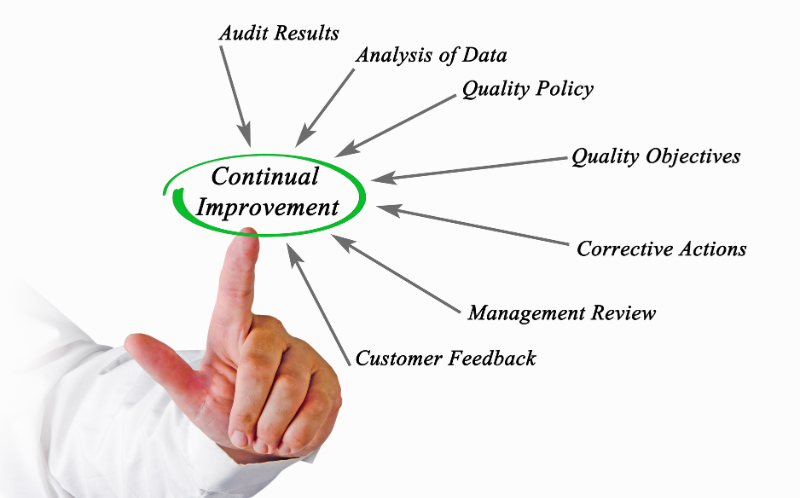
The real secret to future‑proofing: never stop iterating. Corunit clients receive quarterly Search Intelligence Audits covering:
- AEO visibility: how often you’re summarized or cited by AI surfaces.
- UX metrics: findability, friction points, intent match.
- Core Web Vitals: speed, stability, responsiveness.
- New AI platform opportunities: where to place smart bets.
Outputs from Step 6
- Quarterly roadmap with stop/continue/start decisions.
- One‑metric‑that‑matters per quarter to focus teams.
- Backlog ranked by effort/impact so momentum never stalls.
What to Measure (and Why It Matters)
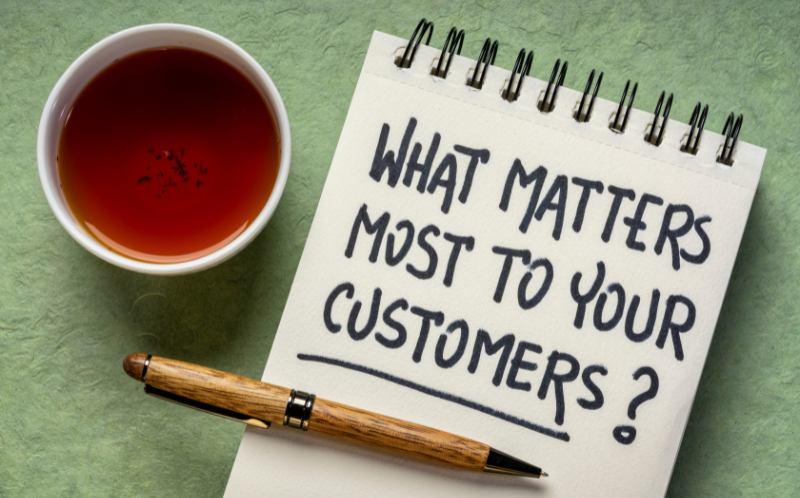
- Trust: branded search growth, review velocity, unprompted mentions, brand safety incidents (target: zero).
- Demand: qualified sessions, subscriber growth, pipeline contribution, LTV/CAC.
- Velocity: time‑to‑publish, test cadence, cycle time from insight → change.
- Experience: task success rate, CSAT/NPS, refund/abandon rates.
A 90-Day Starter Plan
Weeks 0–2: Digital DNA workshop; entity & content inventory; analytics/CRM sanity check. Weeks 3–6: Cluster blueprint; launch first pillar + two supports; UX quick wins; consent copy refresh.
Weeks 7–10: Dual‑brain creative sprint; two experiments (offer + UX); AEO hygiene (schema, FAQs).
Weeks 11–13: Publish remaining supports; repurpose across channels; Q1 audit & next‑quarter roadmap.
FAQs
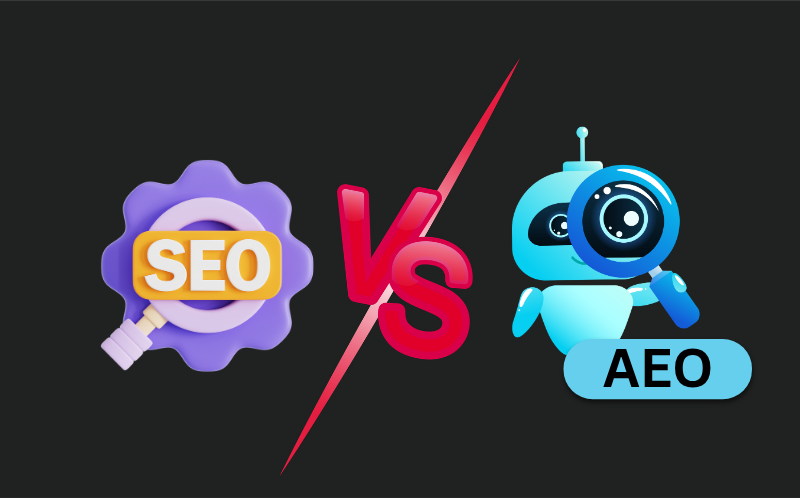
1) What’s the difference between SEO and AEO?SEO helps your pages rank; AEO (Answer Engine Optimization) helps your brand be understood, summarized, and cited by AI assistants and SERP answer features. You need both—SEO for pages, AEO for conversations.
2) We’re a small team. Can we still do content clusters?Yes. Start with one pillar + two supports. Repurpose each piece into email, short video, and chatbot snippets. Depth beats volume.
3) How fast will we see results?Technical/UX fixes can lift conversion in weeks. Authority gains from clusters and AEO typically compound over a few quarters.
4) What is “entity mapping,” exactly?Documenting the people, products, places, and topics that define your brand—and structuring them so search and AI systems reliably connect your content to those entities.
5) How do we keep AI‑generated content accurate and on‑brand?Use a voice/tone guide, prompt libraries with guardrails, retrieval of vetted facts, and human editorial review—especially for high‑stakes claims.
6) What does ethical automation look like in practice?Clear consent, transparent value exchange, easy preferences, and triggers based on meaningful behaviors (e.g., content consumed, lifecycle stage)—not covert tracking.
7) Which metrics matter most?Trust (brand mentions, reviews), Demand (pipeline, LTV/CAC), Velocity (time‑to‑ship, test cadence), Experience (task success, CSAT/NPS). Choose one metric to prioritize per quarter.
8) Do Core Web Vitals still matter if AI answers everything?Yes. Fast, stable pages improve user experience and conversion—and AI surfaces often prefer performant, well‑structured sources.
9) How do we protect our brand from AI hallucinations?Publish clear, structured facts (FAQs, policy pages, spec sheets), use schema, and build recognized authority. The clearer your canonical sources, the less room there is for errors.
10) What’s the first experiment we should run?Pick the smallest change with the biggest potential: trust‑rich product page (social proof + risk‑reversal), simplified form, or a pillar page launch with two tightly linked supports.
Tags What do you think? Show comments / Leave a comment Contact UsWhat to read next

How to Optimize Your Website for AI Search Results
Future-Proof Your Brand: A 6-Step Strategy (2026 Guide)